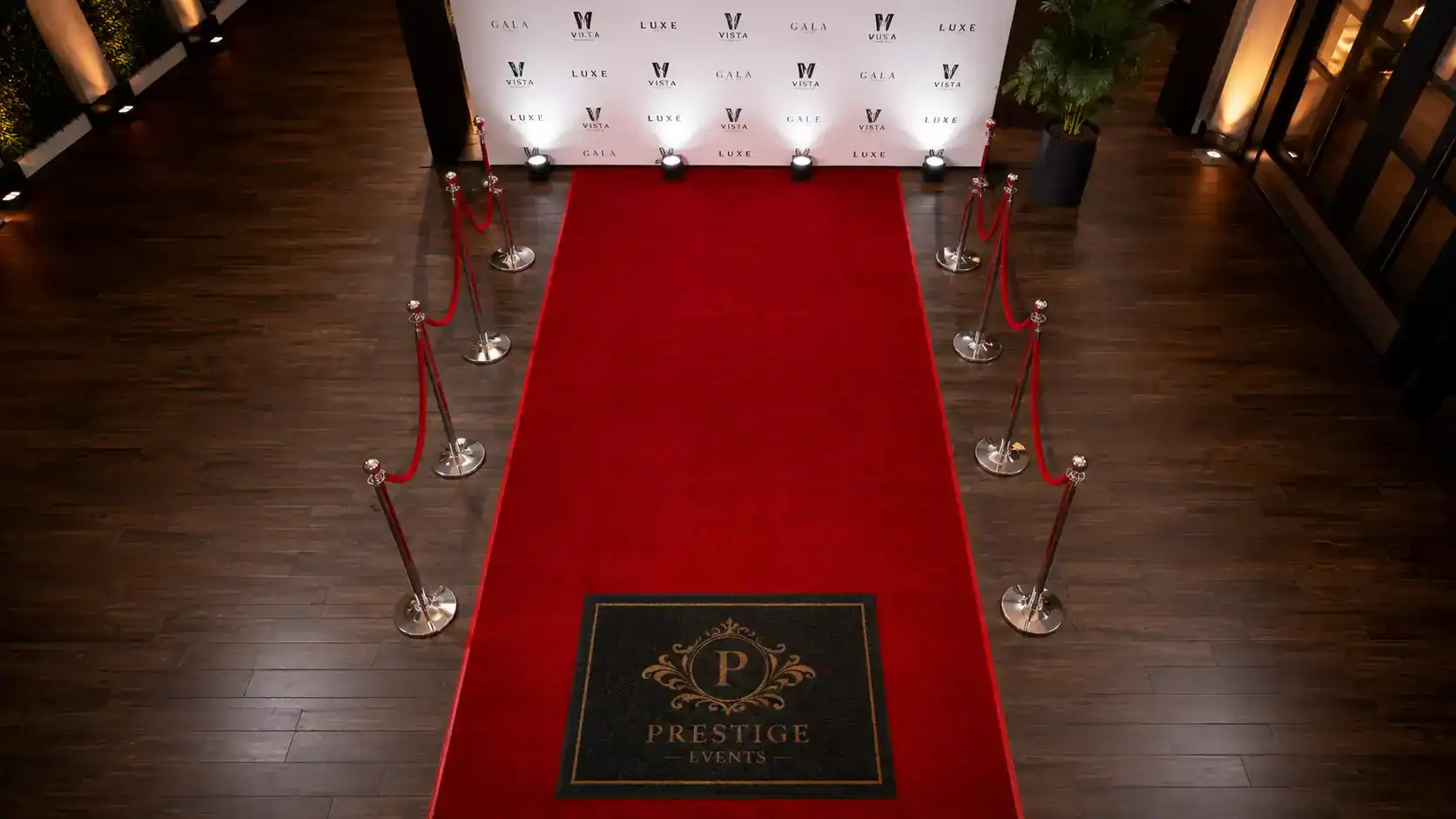
You can have the best venue, the best food, and the best guest list — but if the entrance looks thrown together, the first impression takes a hit. A well-executed event entrance sets the tone before anyone walks through the door. The good news: it doesn’t take a Hollywood production crew. With the right supplies and a clear setup sequence, you can pull it off in a few hours with a small team.
This guide walks through everything you need to set up a professional red carpet entrance from scratch — carpet, backdrop, and logo mat — in the right order, with the right spacing.
Before setup day, confirm you have all three elements on hand:
Start with the carpet — everything else gets positioned around it. Roll it out from the entrance point inward, keeping it centered in the walkway. For hard floors, secure the edges with double-sided carpet tape every 3–4 feet along both sides to prevent shifting or curling under foot traffic. If your runner has a Clear Coat Latex backing, it will grip most hard surfaces without tape.
Standard entrance widths run 4–6 feet wide. If you’re using a 4-foot runner in a wider corridor, center it and leave equal margin on each side. Custom cut and bound carpet runners are available in widths from 2ft to 8ft, so you can match your exact space rather than trimming down a standard roll.
Pro tip: Unroll the carpet the night before if possible and let it relax flat. Freshly unrolled carpet can have a slight curl at the edges that smooths out with a few hours of rest.
The backdrop goes at the far end of the carpet — the destination point where guests stop for photos. Standard placement is centered behind where guests will stand, with the bottom of the frame as close to the carpet as possible without touching it.
A few measurements to keep in mind:
Most fabric step-and-repeat backdrops use a tension frame system that assembles without tools in 15–20 minutes. Set the frame first, then attach the fabric panel from the top down, pulling it taut as you clip or tuck each side. Fabric step-and-repeat backdrops pack flat and are reusable across events, making them a better long-term investment than vinyl banners.
Outdoor note: If your event is outside, use a backdrop with weighted base feet or stake the frame to the ground. Even light wind can topple an unsecured frame. Check weather the morning of — if winds are over 15mph, consider moving the photo area inside or against a building wall for stability.
The logo mat goes at the transition point — either at the very start of the carpet where guests first step on, or just inside the venue door where the carpet ends. This is the highest foot traffic point of the entrance, so it doubles as both branding and a functional floor covering.
For outdoor-to-indoor transitions, a logo mat at the door also serves a practical purpose: it catches debris before guests move onto interior flooring. Custom logo mats are printed full-color with your event logo, sponsor mark, or brand pattern and are cut to your specified dimensions.
A three-element entrance setup — carpet, backdrop, and logo mat — typically takes 2–3 hours for a two-person team on the first run. Factor in:
If it’s your first time using this setup at a new venue, add an extra hour. Every space has quirks — uneven floors, awkward doorways, lighting that changes the look of the carpet color.
Before doors open, walk the entrance yourself from the outside in — the way a guest would. Check for:
Take a photo from 15 feet back — the distance a photographer would stand. What looks right standing next to it often looks different in frame.
All of the supplies in this guide — carpet runners, step-and-repeat backdrops, and custom logo mats — are made to order at our facility in Flemington, NJ. redcarpets.com has been manufacturing event supplies in the USA since 2008. Every order is custom cut or printed to your specifications, so you’re not working around standard sizes that don’t fit your venue.