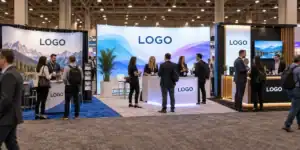
Booth design gets most of the attention — graphics, lighting, product displays — but traffic flow is what determines whether any of that gets seen. A beautifully designed booth that people walk past converts nothing. This guide covers how to lay out your booth space, flooring, and signage so visitors naturally walk in instead of past.
Attendee movement on a trade show floor is more predictable than it looks. A few consistent patterns show up across nearly every show:
Designing for these patterns — rather than against them — is the difference between a booth that pulls people in and one that just looks good in photos.
The single biggest traffic killer in booth design is a closed front. A counter, a table, or a wall positioned at the entrance signals “stop here and be sold to” — and most attendees would rather keep walking than commit to that interaction unprompted.
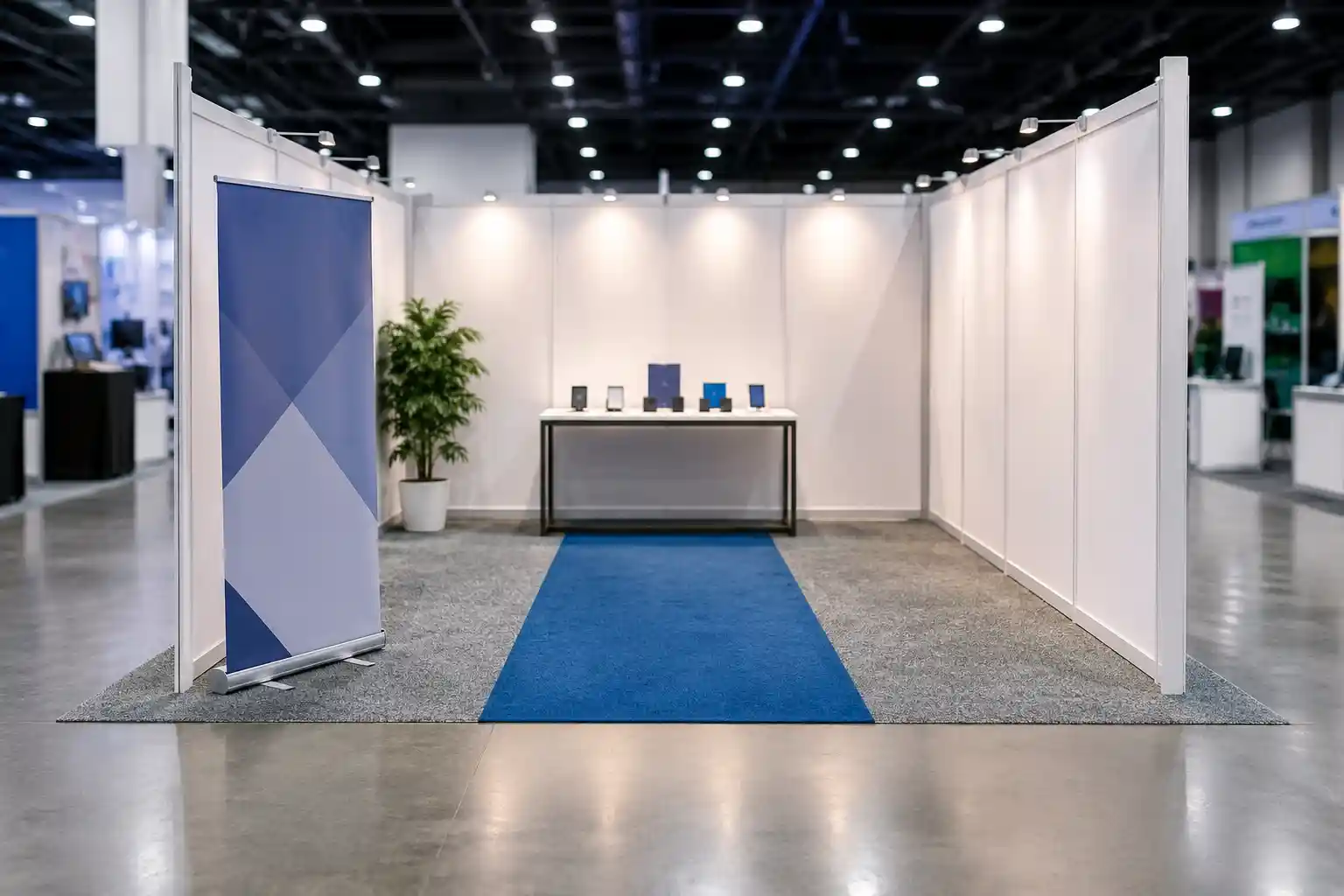
An open layout does the opposite: it lets attendees see into the booth from the aisle, browse at their own pace, and approach your team when they’re ready rather than the moment they make eye contact. This matters most for the first 5–10 feet of booth depth — keep that zone open, and push tables, counters, and seating further back.
Flooring does more work in a booth than most exhibitors give it credit for. It marks where your space begins against the surrounding aisle carpet, and it can subtly pull visitors toward a specific point rather than letting them wander the perimeter.
A few ways flooring supports traffic flow inside a booth:
See our trade show exhibit carpets for flooring sized to standard booth footprints, or custom logo carpets and photorealistic mats if you want the floor itself to carry branding. For more on how carpet placement directs movement generally, see our guide on how carpet runners direct foot traffic at events.
Attendees decide whether to approach a booth from several feet away, which means your most important message needs to be readable before they’re standing in front of it. A retractable banner positioned at the edge of your space, angled toward the aisle rather than flush against the back wall, captures attention earlier and gives passersby a reason to redirect.
Keep banner messaging to a single headline and one supporting line — readable from 6–10 feet, not a full pitch. Save the detailed information for the conversation that happens once they’ve already stopped. See our retractable banner stands for options sized for booth entrances and aisle-facing placement.
Booth traffic flow comes down to removing friction at the entrance, using flooring and color to make your space visually distinct, and positioning signage where it can be read before attendees commit to stopping. None of this requires a bigger booth or a bigger budget — it requires laying out what you already have with traffic patterns in mind rather than against them.
If you’re planning your full booth setup, our event carpet buying guide covers sizing and material choices for trade show flooring specifically.