A carpet runner isn’t just decoration — laid out correctly, it’s one of the simplest tools for directing where people walk. Before you reach for signage, the carpet itself can solve most of your foot traffic problems: where guests enter, how they queue, and where their attention ends up. This guide covers how to use carpet placement to manage flow at entrances, registration points, and booths.
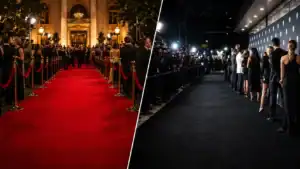
People instinctively follow a clear path laid out in front of them — a carpet runner is one of the most effective ways to create that path without a single sign or rope. Unlike barriers, which physically block movement, a carpet runner guides movement, which tends to feel more welcoming at events where you want guests to feel directed, not corralled.
This matters most at the three points where foot traffic typically bottlenecks: building entrances, registration or check-in tables, and the transition from open space into a single line.
How wide you go affects how people move:
If you’re still deciding on dimensions for your event, our event carpet buying guide covers how to measure your space and choose the right size before you order.
Most events have a moment where a wide open area needs to narrow into a single point — a check-in table, a photo backdrop, a security checkpoint. Carpet runners handle this transition well when they’re laid in a taper or angled shape: wide where guests first arrive, narrowing as they approach the focal point.
This works particularly well paired with a step and repeat backdrop at the end of the path, where the narrowing carpet naturally builds anticipation and funnels guests toward the photo moment without anyone needing to direct them verbally.
Carpet placement handles most flow situations, but a few scenarios call for additional support:
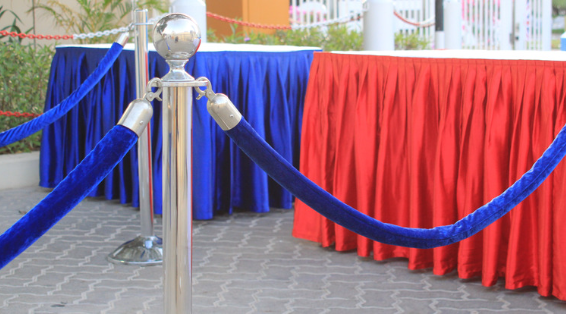
In these cases, carpet works best alongside a queue line rather than as a substitute for one — the carpet defines the path, and the line holds it at the points that need it most.
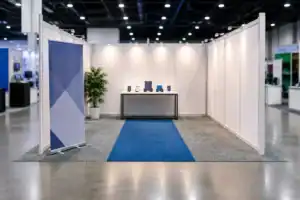
Inside a booth footprint, carpet placement does double duty: it defines your space against the surrounding aisle carpet (or bare flooring), and it can subtly direct visitors toward a product display, demo station, or sales conversation rather than letting them wander the perimeter. A runner placed perpendicular to the aisle, leading inward, tends to pull more foot traffic into the booth than a carpet that simply mirrors the booth’s outer edge.
For carpets built specifically for booth dimensions and high foot traffic, see our trade show exhibit carpets.
Before adding signage or staff to direct guests, start with the carpet layout itself — width, shape, and placement do most of the work of guiding foot traffic on their own. Save the additional tools for the specific bottlenecks where carpet placement alone won’t hold the line.
Once your layout is planned, make sure your runner stays exactly where you put it — see our guide on carpet tape for events for how to secure it properly on both indoor and outdoor surfaces.